


admin
Categories
Start with how they want to buy
By Rhyn Potgieter
Most B2B commerce projects I see have already made their biggest decision before anyone has spoken to a buyer. The platform is chosen, the licence is signed, the integration partner is briefed, and only then does someone ask what the customer actually needed. By that point the answer is not really an answer. It is whatever the software allows.
That order is backwards, and it is expensive in a quiet way, because nothing visibly fails. The eCommerce platform goes live, it looks modern, and your buyers keep phoning the branch anyway.
We prefer to reverse it.
We start with the buyer, work backwards to the journey, and let the technology be the last decision rather than the first.
That order is backwards, and it is expensive in a quiet way, because nothing visibly fails. The eCommerce platform goes live, it looks modern, and your buyers keep phoning the branch anyway.
We prefer to reverse it.
We start with the buyer, work backwards to the journey, and let the technology be the last decision rather than the first.
Sit with the people who place your orders
This is not a survey. Not a workshop with the account managers who speak on their behalf. We sit with the person who places the order, at their desk, on an ordinary Tuesday, and watch them do it.
You are not there to gather requirements. You are there to count interruptions.
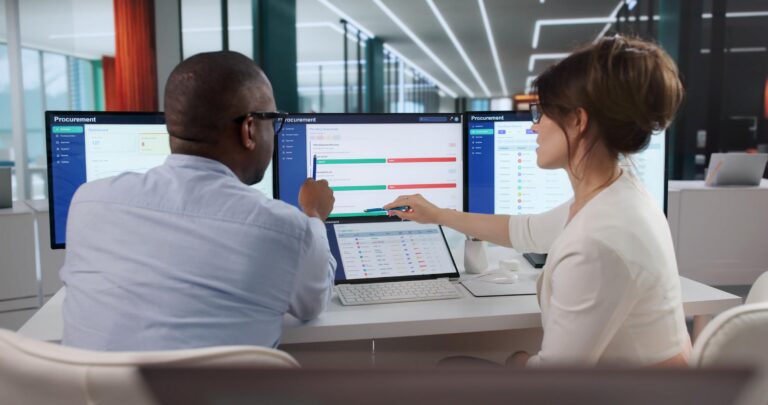
Watch someone reorder, and count how many times they leave the screen. Every time they pick up the phone to check whether the stock is real. Every time they open a spreadsheet because they keep their own price list, since they stopped trusting yours. Every time they message their manager to ask whether this order will push them over their limit. Every time they open last month’s invoice to work out what they still owe you.
Each of those moments is a thing your system should have told them and did not. Count them, and you have a number. Most distributors and manufacturers we work with are surprised by how high it goes, and more surprised that the number is highest for their best customers, because the biggest accounts have the most complicated pricing, the most credit exposure, and the most approvals to clear.
The same three blind spots, almost every time
What comes out of those sessions is rarely a feature list. It is a picture of where your buying process breaks and it tends to break in the same three places.
They cannot see their price. Not list price. Their price, with their contract, their volume break, their agreed discount, their rebate, applied to this basket today. If a buyer has to phone to confirm a price, your channel is a catalogue with a form attached, not a place to transact.
They cannot see whether stock exists. Not a green tick that means “we usually have this”. Real availability, in the branch or warehouse that will actually fulfil it, with a date they can hold their own customer to. Buyers who have been let down once will phone forever after, no matter what the screen says.
They cannot see what they owe you against what they are allowed to spend. Balance, credit limit, what is already committed on open orders, what is overdue. This is the one that most portals ignore entirely, and it is the one that stops orders dead, because the buyer will not commit to a number they cannot defend internally.
Price, availability, credit. Those three answers are what a B2B buyer needs before they will commit and in most businesses they live in the ERP, in a sales rep’s head and in a debtors report that nobody outside finance can open.
Now you have something worth designing against
Three blind spots is a problem statement. It is specific, it is observable and it can be measured before and after.
From there you can sketch the experience and the process that solves it, on paper, before anyone commits to architecture. What the buyer sees when they land. Where their price comes from and how fresh it has to be. What happens when an item is short, because it will be. What a buyer over their limit is shown and who gets asked to approve it, and how long that takes. Who owns the answer when the ERP and the storefront disagree.
Those conversations are cheap while they are still drawings. They get very costly once they are code.
This is also where you find the internal process problems that no platform will fix for you. If nobody in your business can say what the buyer’s price should be without phoning someone, that is not a software gap and buying software will not close it. Better to know that now.

Then and only then, the platform question
When the journey is on paper, the platform question finally makes sense, because you have something to measure the answer against.
Can this solution show my buyer their price, their availability and their credit position, in the moment they need them, without anyone leaving the screen.
That question does uncomfortable things to a shortlist.
Platforms built for consumer retail answer it badly, because they were designed for a world where price is public, stock is a single number and payment happens at checkout. Everything a B2B buyer needs sits behind that assumption, in your ERP, and the work is in the integration rather than the storefront.
A demo will not tell you this.
The question will.
It also changes what you buy. Once the three answers are the requirement, you stop paying for merchandising features you will never use, and you start budgeting properly for the integration work that actually determines whether the thing gets used.
What this looks like in practice
Go and sit with five buyers. Count the interruptions. Write down the three answers they had to leave your system to find. Sketch the journey where they do not have to. Then with that in hand, go and ask vendors a question they cannot answer with a demo reel.
Buyer first, journey second, technology last.
In that order the platform decision becomes straightforward because by the time you make it, you already know what you are asking the platform to do.
Hope this helps!
Please reach out if this resonates and you would like to chat further.