


admin
Categories
Shopping with your senses
By Rhyn Potgieter
Most of us follow similar steps when shopping online by entering something in a search field, scrolling, filtering, comparing, second-guessing, reading the reviews, then either buying or abandoning it and returning later.
It’s efficient. But it’s unnatural.
Hopping rarely starts with a perfect search term. It starts with a vague idea, a problem to solve, something you saw out in the world or that feeling of “I like that”.
What is changing right now is how digital commerce meets people at that starting point. We are moving beyond “tell me what you want” toward “show me”, “talk it through with me” and “remember what matters next time”.
Not as a gimmick. As a better way to buy.
The search bar was never as helpful as we pretended
But a lot of shopping isn’t that clean.
It’s more like:
- “I saw a chair at a restaurant and I want something like it.”
- “I need an outfit that works for a Joburg winter but still looks good on a Teams call.”
- “I need a gift for my Dad, however he is picky and I’m running out of time.”
- “I like this style, but I don’t know what it’s called.”

Search demands precision at the exact moment people don’t have it. And when the experience falls apart, customers don’t always complain. They just leave. That’s the quiet failure of many online stores. Not anger. Friction.
Visual search fixes a real gap
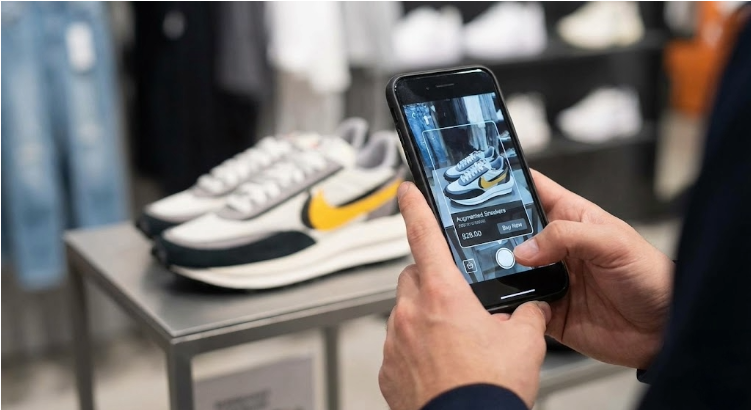
Visual commerce has an obvious advantage – instead of describing what you want, you show it. A photo of a chair. A screenshot of a jacket. A colour you noticed on a wall. A product you saw in a video.
This isn’t just “find me this exact item.” It’s “find me this kind of thing.” The style, shape, texture, and vibe. And that’s closer to how people actually shop.
Over time, visual signals can help a platform understand taste, better than a purchase history ever could. Someone’s photo choices can reveal preferences that clicks don’t.
Voice adds context, not just convenience
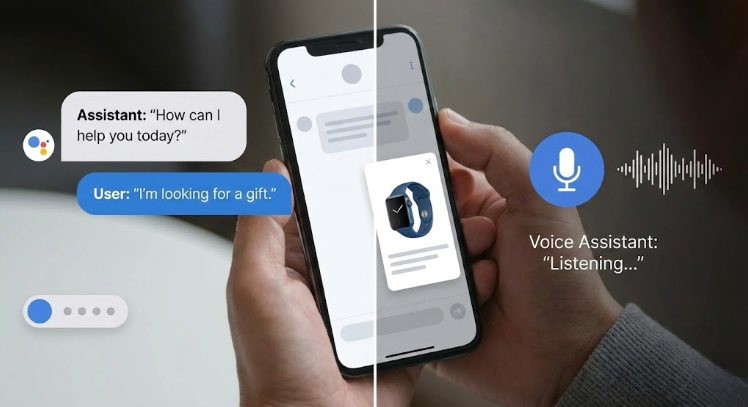
Voice commerce has been clunky in the past because early versions were only good for simple reorders. That’s changing because the tech can now interpret intent and handle follow-ups. And voice has one big advantage – people naturally give more context when they speak.

Compare:
- black dress size 10
with
- “I’ve got a wedding next Saturday. I want something elegant but not too formal. I usually wear darker colours, but I’m open to suggestions.”
That second request contains an occasion, preferences, boundaries and openness to guidance. That’s the kind of input a great in-store assistant works with. Online shopping needs more of that.
Trust is the foundation
You can’t talk about hyper-personalisation without talking about privacy. Customers want experiences that feel tailored, but they don’t want to feel watched. And regulations like POPIA and GDPR reflect that shift.
The only way this works long-term is with transparency and control:
- customers should know what’s being collected,
- why it’s collected,
- how it changes their experience,
- and how to switch it off or delete it.

Trust is what makes personalisation possible without becoming creepy.
Why this matters in Africa
In many African markets, mobile-first isn’t a trend. It’s the default. Voice matters more where there’s linguistic diversity and varying literacy levels.
Visual search helps where product descriptions are inconsistent or unsearchable. Conversational flows can bridge the gap between informal commerce and formal platforms.
And importantly, African companies don’t need to copy Western templates. If you design for someone shopping on a phone in Soweto, you make different choices around trust, UX, bandwidth, payments and support. That’s an opportunity to build better, not just cheaper.
Have an e-commerce project in the works?
Webtonic Solutions is a software development company specialising in custom software development, digital transformation, and B2B commerce solutions.
If you’re ready to move beyond transactional e-commerce and build a more guided, customer-first experience.